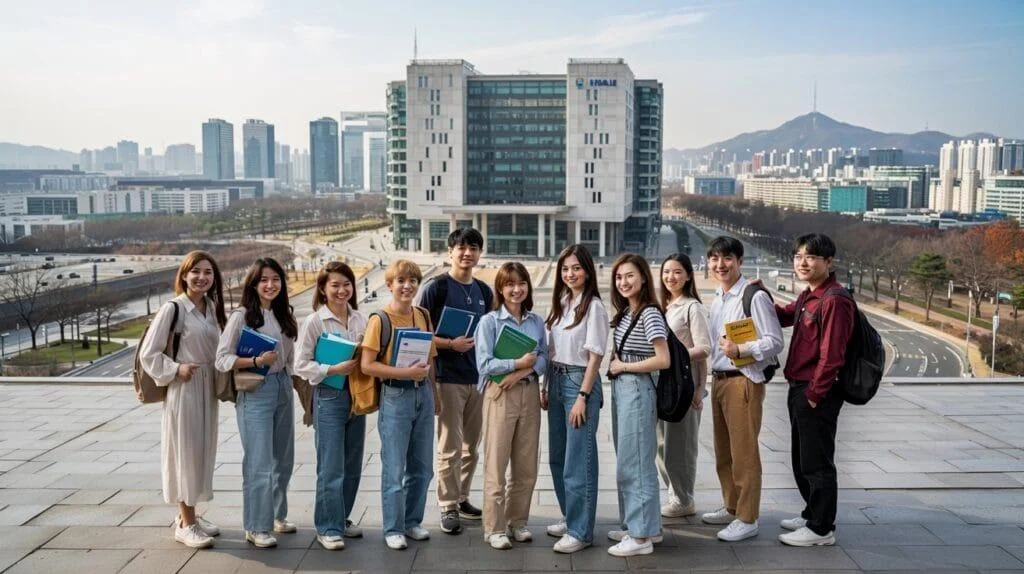
South Korea D-2 Student Visa for Nepalese Students: Requirements, Process and Study Guide
Studying at a university in South Korea can open the door to internationally recognized education, advanced academic facilities, and valuable opportunities to experience Korean society and culture. For international students who plan to pursue a degree at a Korean university or graduate school, the South Korea D-2 Student Visa is one of the key immigration requirements.
For students applying from Nepal, understanding the D-2 visa process before beginning the application can help avoid unnecessary document errors and delays.
This guide explains the South Korea D-2 Student Visa, including who needs it, common requirements, the application process, financial documentation, language requirements, part-time work considerations, and what students should know before travelling to Korea.
What Is the South Korea D-2 Student Visa?
The D-2 visa is a student status used for eligible international students who come to South Korea for recognized academic study.
It is generally associated with degree-level education at Korean higher-education institutions, including programs such as:
-
Bachelor's degree programs
-
Master's degree programs
-
Doctoral programs
-
Other eligible academic programs under the D-2 classification
The exact D-2 subtype and immigration requirements can vary depending on the student's academic program and circumstances.
Therefore, students should always confirm the applicable visa category and current requirements with their university and the relevant Korean immigration or diplomatic authority.
Who Needs a D-2 Visa?
International students who plan to undertake eligible long-term academic studies in South Korea generally need an appropriate student status before beginning their studies.
For a student from Nepal, the process normally involves:
-
Selecting a suitable Korean university and academic program
-
Meeting the university's admission requirements
-
Receiving admission from the institution
-
Preparing the required visa and supporting documents
-
Applying through the appropriate Korean diplomatic authority
-
Completing the required immigration procedures after arrival, where applicable
The exact procedure can differ according to the student's program, institution and individual circumstances.
Common D-2 Student Visa Requirements
The required documents depend on the university, program and applicant. However, applicants may commonly be asked to provide documents such as:
-
Valid passport
-
Visa application form
-
Recent passport photographs
-
Official admission documentation from the Korean institution
-
Academic certificates and transcripts
-
Proof of financial capability
-
Tuition payment or related financial documents, where applicable
-
Sponsor or financial-support documents, where applicable
-
Language proficiency documents, if required
-
Additional documents requested by the university or Korean authorities
Students should prepare their documents carefully because incomplete, inconsistent or inaccurate information can create problems during the admission or visa process.
Academic Documents
Universities normally evaluate an applicant's previous academic background before issuing admission.
Depending on the program, students may need academic certificates, transcripts and other educational documents.
The exact academic criteria are determined by the individual university and program.
Proof of Financial Capability
Financial documentation is an important part of the student visa process.
Applicants may need to demonstrate that they have sufficient financial resources to support their education and living expenses in Korea.
Depending on the circumstances, financial evidence may involve:
-
Bank documents
-
Tuition payment records
-
Sponsor documentation
-
Financial certificates
-
Other supporting evidence requested by the university or authorities
Because financial requirements can change and may differ by institution or applicant, students should obtain the latest requirements before preparing their final visa file.
Is TOPIK Required for a D-2 Visa?
There is no single language requirement that applies identically to every D-2 applicant.
The language requirement may depend on:
-
University
-
Degree program
-
Korean-taught or English-taught course
-
Admission requirements
-
Scholarship conditions
-
Applicant's academic background
For Korean-taught programs, a university may require a certain level of TOPIK (Test of Proficiency in Korean).
For English-medium programs, an institution may instead request an English-language proficiency test or other evidence of language ability.
Therefore, students should check the specific requirements of their chosen university and program rather than assuming that one language score applies to every D-2 application.
D-2 Visa Application Process from Nepal
A typical application journey can be understood in several stages.
Step 1: Choose a University and Program
Begin by identifying Korean universities and academic programs that match your:
-
Academic qualifications
-
Career goals
-
Budget
-
Language ability
-
Preferred location
-
Long-term plans
Do not select a university only because it is advertised as easy to enter. Program quality, accreditation, tuition, location and career relevance should also be considered.
Step 2: Apply for Admission
Prepare and submit the documents required by the selected Korean university.
The institution reviews the application and, if successful, provides the relevant admission documentation.
Step 3: Prepare Financial and Visa Documents
After admission, prepare the documents required for the visa process.
At this stage, students should carefully check:
-
Names and dates
-
Academic records
-
Financial documents
-
Passport information
-
University documents
-
Translations and certifications where required
Consistency between documents is particularly important.
Step 4: Submit the Visa Application
The applicant submits the visa application and supporting documents through the appropriate Korean diplomatic authority or designated application process in Nepal.
Additional verification or an interview may be required depending on the circumstances.
Step 5: Travel to South Korea
After receiving the appropriate visa approval, students can make their travel arrangements according to the conditions communicated by the authorities and university.
Arrival procedures and residence registration requirements should also be completed within the applicable timeframe.
Can D-2 Students Work Part-Time in South Korea?
International students may be permitted to undertake part-time employment under certain conditions, but a D-2 visa should not be treated as unrestricted permission to work.
Students generally need to follow Korean immigration rules regarding:
-
Eligibility
-
Permission requirements
-
Working hours
-
Types of permitted employment
-
Academic status
-
Reporting obligations
The applicable rules can change, so students should confirm the current requirements with Korean immigration authorities or their university's international student office before beginning employment.
Working without the required permission can create immigration problems.
Can a D-2 Student Extend Their Stay?
A student's stay in Korea is connected to their academic and immigration status.
Students who need additional time to complete their studies may be able to apply for an extension when eligible.
However, an extension is not automatic.
Students should monitor:
-
Visa/status expiration dates
-
Enrollment status
-
Academic progress
-
Passport validity
-
University documentation
-
Current immigration requirements
It is better to begin the extension process before the existing period of stay expires.
What Happens After Graduation?
Graduation does not necessarily mean that every student must immediately leave Korea.
Depending on their circumstances and eligibility, graduates may have options to change to another appropriate status for purposes such as further study, job seeking or employment.
The correct pathway depends on the student's:
-
Qualification
-
Employment situation
-
Korean employer
-
Field of study
-
Immigration status
-
Current Korean immigration regulations
Students should therefore plan their post-graduation pathway well before completing their degree.
Common Mistakes Nepalese Students Should Avoid
A strong application is not only about collecting documents. Students should also avoid common mistakes such as:
1. Choosing a University Without Research
Do not choose an institution solely because someone promises an easy visa or admission.
2. Submitting Inconsistent Documents
Names, dates, academic information and financial records should be accurate and consistent.
3. Ignoring Financial Requirements
Students should understand the financial documentation required for their specific university and visa process before submitting an application.
4. Using Unverified Information
Visa rules and university requirements can change.
Always verify important information through official sources.
5. Treating a Visa as Guaranteed
No consultancy should promise a guaranteed visa outcome.
The final decision belongs to the relevant Korean authorities.
Why Professional Counselling Can Help
Applying to study in South Korea involves more than completing a visa form.
Students may need guidance with:
-
University selection
-
Course selection
-
Admission documentation
-
Financial-document preparation
-
Language requirements
-
Statement of Purpose preparation
-
Application timelines
-
Visa documentation
-
Pre-departure preparation
For students from Hetauda and surrounding areas, TODDLE MULTIPURPOSE COMPANY provides education counselling and assistance for students planning to pursue study opportunities in South Korea.
The counselling process can help students understand their academic options, prepare documentation systematically and identify potential issues before submitting an application.
Students searching for South Korea education consultancy in Hetauda, Korean student visa from Hetauda, or D-2 visa guidance in Nepal can contact TODDLE MULTIPURPOSE COMPANY for information about the available counselling and application-support services.
Frequently Asked Questions
What is a D-2 visa in South Korea?
The D-2 visa is a student status for eligible international students pursuing recognized academic studies in South Korea.
Can Nepalese students apply for a D-2 visa?
Yes. Eligible Nepalese students who have been admitted to an appropriate Korean educational institution can apply through the applicable visa process.
Is TOPIK mandatory for every D-2 student?
No. Language requirements depend on the university and academic program. Korean-taught programs may require TOPIK, while English-medium programs may have different requirements.
Can D-2 students work in Korea?
Eligible students may be able to work part-time after meeting the applicable requirements and obtaining the necessary permission. Students should confirm the current rules before starting employment.
Can a D-2 visa be extended?
Eligible students may apply to extend their period of stay when they need additional time for their studies, subject to applicable immigration requirements.
Can students stay in Korea after graduation?
Depending on their circumstances and eligibility, graduates may be able to change to another appropriate status for further study, job seeking or employment.
Is a South Korea student visa guaranteed after admission?
No. Admission to a Korean university does not automatically guarantee visa approval. The relevant authorities make the final immigration decision.
Final Takeaway
The South Korea D-2 Student Visa is an important part of the journey for international students planning to pursue eligible academic studies in Korea.
For Nepalese students, successful preparation begins well before the visa application. Choosing the right university and program, understanding financial and language requirements, preparing accurate documents, and following the current immigration procedure can make the overall process more organized.
If you are planning to study in South Korea from Hetauda or elsewhere in Nepal, professional education counselling can help you understand your options and prepare your application more systematically.
Start with the right university, prepare your documents carefully, verify the latest official requirements, and plan your Korean education journey with accurate information.
Important Note
Visa regulations, document requirements, financial requirements and permitted activities may change. Students should confirm the latest requirements with the relevant Korean authorities, diplomatic mission and their university before submitting an application.